
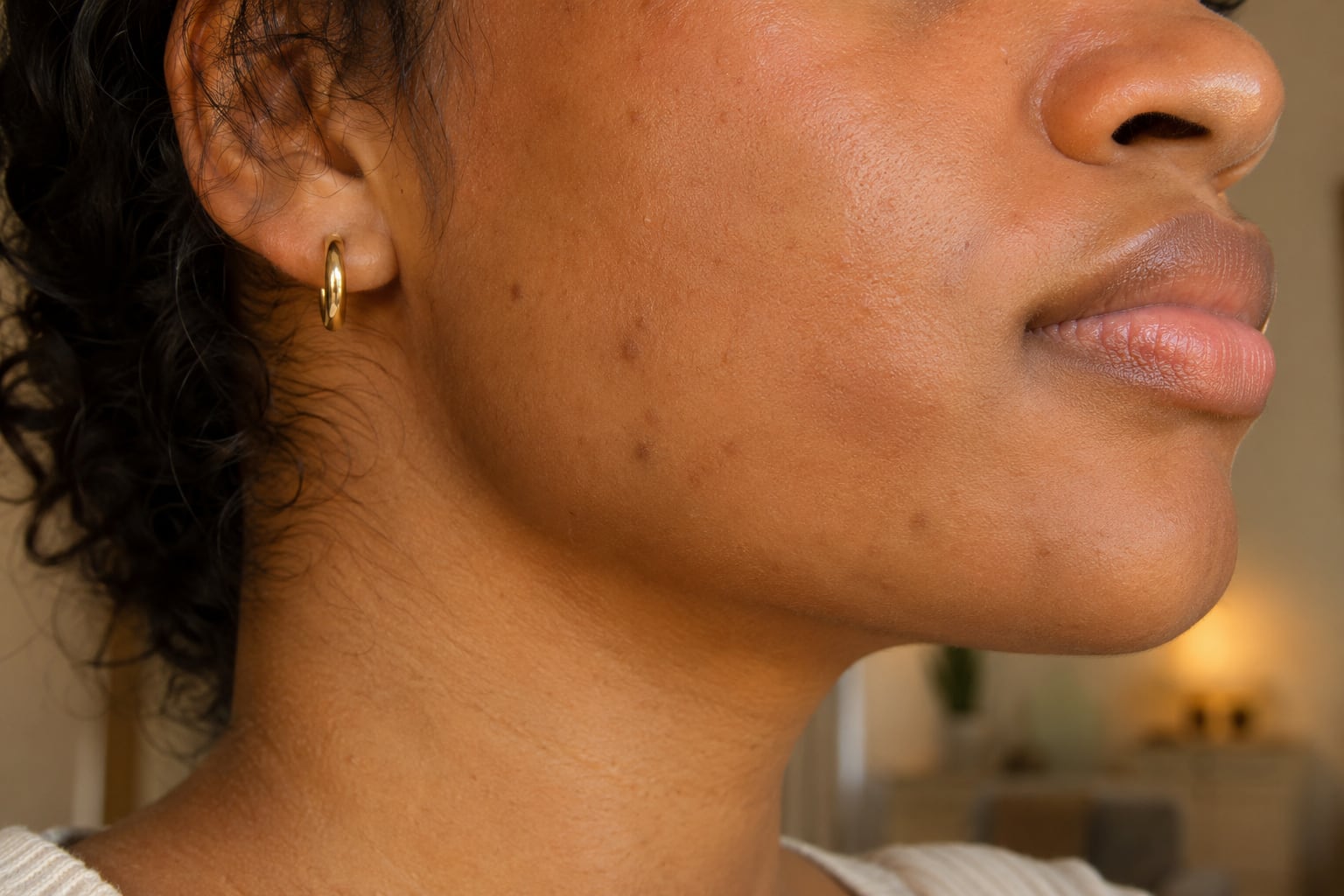
A breakout or small injury heals, but the dark mark can stay behind. Readers in Chelsea, Michigan often wonder why. The condition has a name, postinflammatory hyperpigmentation, and two published statements explain much of it.
Who it affects most
dermnetnz.org says: "Postinflammatory hyperpigmentation can occur in anyone but is more common in darker-skinned individuals, in whom the colour tends to be more intense and persist for a longer period than in lighter skin colours." So a mark that lasts longer than expected, especially on darker skin, is a known pattern, not a personal failure.
What happens in the skin
The same publisher describes the process: "Postinflammatory hyperpigmentation follows damage to the epidermis and/or dermis with deposition of melanin within the keratinocytes (skin cells) and/or dermis." Damage comes first. Melanin deposits follow.
What to do next
Note when the mark appeared and what caused it. Show your clinician photos if you have them. Ask for a firm quote only after the exam, since a ballpark cannot account for your skin. For wider reading on darker areas of skin, see this overview of hyperpigmentation.