
A peel can change skin color, and the risk is not the same for everyone. Readers in Chelsea, Michigan with a darker skin tone should weigh that before booking. One comparative study of trichloroacetic acid and salicylic acid peels shows the kind of research behind these choices.
The risk of darkening
my.clevelandclinic.org states it plainly: "However, if you have a darker skin tone, you have a greater risk of experiencing a darkening of your skin after treatment." The risk applies after treatment, so it belongs in the planning stage.
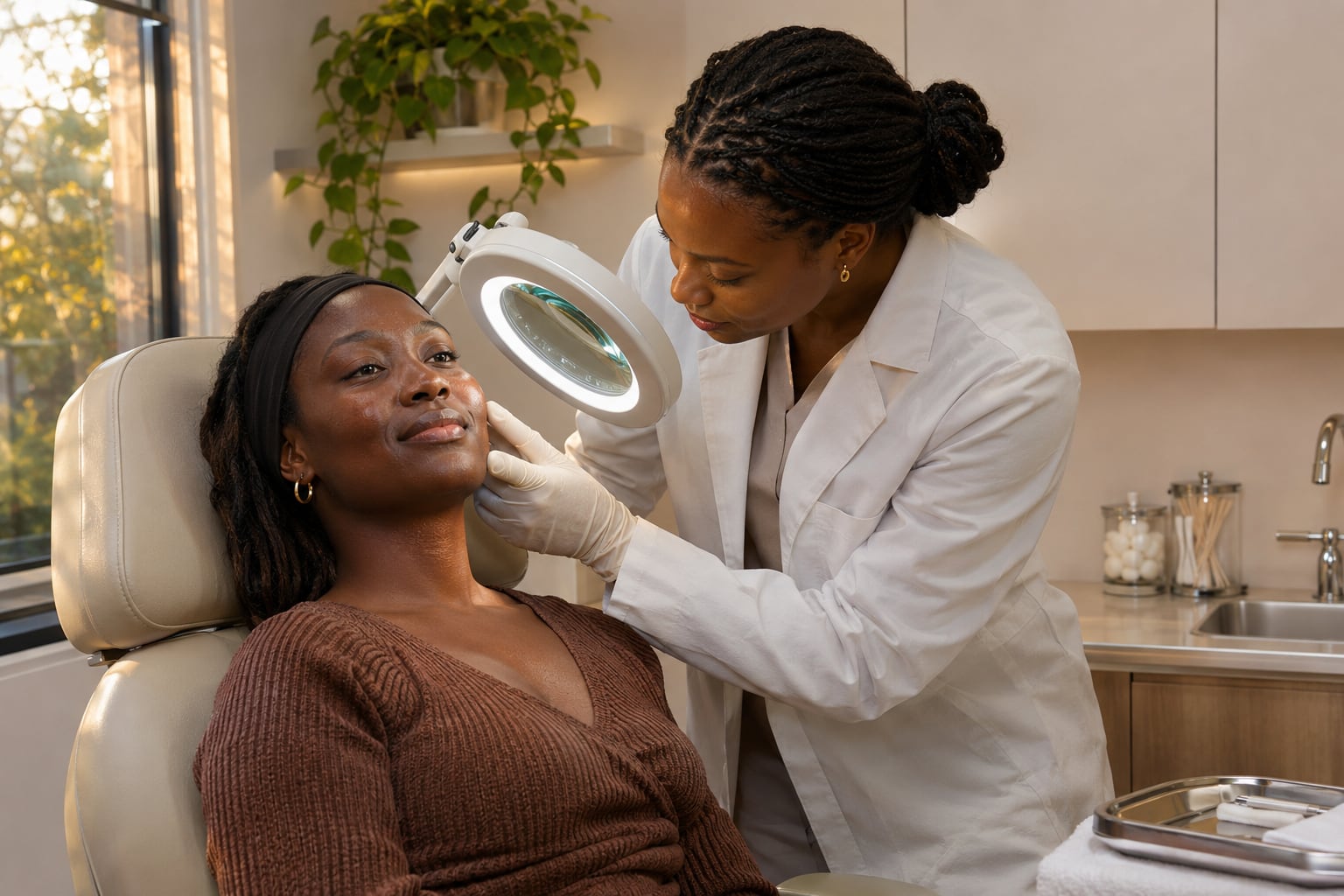
What a clinical source adds
dermnetnz.org puts it in clinical terms: "Patients with Fitzpatrick skin types IV to VI have increased risk of dyspigmentation , hypertrophic , and keloid scarring and chemical peels must be performed cautiously with full patient informed consent." Colour change after skin injury has its own page on postinflammatory hyperpigmentation.
Consent is part of the process
The same sentence points to full patient informed consent. Treat that as a conversation, not a form. Ask what could happen to your skin color and what the plan is if it does.
Asking for a firm quote
Ask whether the quote includes a plan, and follow-up visits, in case your skin color changes. For wider reading on darker areas of skin, see this overview of hyperpigmentation.